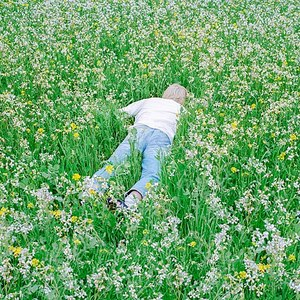
9/10
Overview
Arriving in 2021, after a seven-year hiatus, Nurture represented Porter Robinson’s return from a period of creative paralysis following the release of Worlds in 2014. Worlds was described by Billboard as the result of “the product of EDM exhaustion”, representing a softer and more intimate alternative to the more heavy handed and extroverted “bangers” that dominated festival lineups and radio airwaves. The album was later touted it as one of the best dance albums of the 2010s, marking one of the defining records of the decade, as a deliberately unapologetic confrontation of dance-centric status-quo.
It is from this context that Nurture emerged. The themes of the record are those of self-doubt multiplied by the weight of expectations, both internally and externally, that had been placed upon Porter Robinson. Throughout songs such as Mirror, Get Your Wish, and Musician, Porter’s internal debate is thrust into the spotlight. Is he still capable of making work that matters, or was Worlds an unrepeatable accident? Through this, Nurture turns Porter’s personal and creative struggle into the subject of the record itself.
Q Windswept – 8/10
The album’s opener, introduces many of its main themes, in a gentle way, sputtering into life with a soft wind-like pad, water foley, with electronic plucks and melodic elements coming in and out. Elements seems to fight against each other, jostling for audio-based real estate. One can begin to hear the garbled vocals, not knowing whether it is your inability to understand, or the creators inability to communicate whatever the voice is saying. It serves as a soaring and gentle introduction to the album as a whole.
Cycles – 7/10
The beginning of Cycles introduces the album’s darker themes, serving as a juxtaposition to Q Windswept. Gone are the soft pads from the previous track, replaced by a distorted kick drum, that surrounds itself with similarly distorted synths. The distortion gives way to temporary levity, with acoustic guitar lines plucking over an airy pad, and a gentle piano meandering across its own keys; yet throughout, there are the darker undertones of the distortion and aggression throughout. The distorted kick drums become accentuated with vocal flourishes, losing part of their aggression, but creating a through-line of structure and a sense of rhythm in an otherwise unnavigable landscape. Throughout the track there is a constant tug-of-war between the moments of care-free lightness, and oppressive darkness.
Sutter – 10/10
Leading on from Cycles, Sutter soars out of darkness, driven by a choir of soft and extremely auto-tuned vocals, which become the basis for this sound and underscore much of the album. Sutter contains some of the only plainly unprocessed voices on the album, with one voice saying:
I’m just saying you’ve got to live in the moment
To which they receive the reply:
The moment?
I want – I want more than a moment.
I want a future.
These lines echo a lot of what Panos seems to want to express within the album. Panos writes on his Bandcamp release that the album represents “The desire to become a better human being, longing to actively participate in the world around you, striving to actualize your potential, and finding meaning in the process”. These brief moments of understandable words, backed up by Panos’ soaring cries, hint at brief tangible meaning breaking out of an otherwise noise-filled world. On occasion these garbled voices come together to create words or repeated parts of the original discussion between the two voices, as if the artist is harnessing the chaos itself to create meaning and distinction. Sutter feels simultaneously joyous and mournful, as if relishing in the ability to create, but terrified in its lack of ultimate meaning.
36523_Red/Blue – 8/10
As the title of this song suggests, this track (which I will refer to as Red/Blue) centers around juxtaposition and opposites. In a much more heavy-handed way to Cycles, which fairly gently “cycled” between harmony and aggression, Red/Blue rapidly flicks between different sound palettes and sonic ideas. Especially in the opening minute, one would struggle to keep track of the sheer amount of different sounds and ideas that Panos has managed to cram into such a short space of time. This is perfectly embodied from 0:55-1:30, where the previously (previously in this case meaning earlier in the album) swooning and soaring vocals are replaced with quick, but structured, robotic chops.
The song transitions from a disjointed, and deliberately confused jumble of sounds to a galloping passage where the all of the previously hinted elements rejoin to create a joyfully and well-earned coherent passage (this sounds harsh but I mean it in the best way possible). Red/Blue pushes Panos’ kaleidoscopic sound in and out of alignment in a hugely satisfying and rewarding way, allowing the listener to revel in the harmony that emerges from what appears as constant indecision and switching in the opening.
Reasonsnotto – 9/10
A much more simple song in comparison to what has come before, and whilst the sound is still a hugely technical stack of layered and harmonised gibberish (I imagine this might be what Imogen Heap would sound like if I didn’t understand English), the lack of other sounds gives the listener some respite from the onslaught of sounds. Having said that, this is not a stripped back vocal ballad, as especially towards 2:30, Panos makes sure to remind us who we are listening to.
On the contents of the song itself, the listener is confronted again with unintelligible robotic and rhythmic vocalisations, that sound roughly Slavic in their pronunciation. Yet by 1:30, the vocals give way to Panos restating the earlier voices, pleading for “more than a moment”, only to be swallowed again by the garbled and gibberish vocals. The two sides, understandable and not, almost seem to fight against one another, becoming progressively more distorted, flanged and, chopped up, before Panos re-emerges to enter in a soaring peak, both for the song and the album as a whole. The end of the song allows him to express the message that has been endlessly rearranged, distracted and obfuscated by seemingly random noises, into a cathartic call for purpose and attention.
Dream Extinction – 8/10
Dream Extinction reintroduces the more insidious elements hinted in Cycles, opening with evil and distorted sounds, even underscored by screams. If you listen closely you can hear the previous message, pleading for a moment and a future, drowned out by the harsh heavily processed basses. The start of the song at time verges on overindulgent, and really alters the mood of the album, although in a clearly deliberate fashion. Despite the darker tone, the introduction gives away to one of the larger crescendos in the album, crashing into the listener’s ears as walls or waves of sound. The “evil” sounds are still present, but Panos expertly blends them into another context, as if to exemplify that he can re-contextualise the negativity around/within him, into a strength and a powerful tool for rediscovery/re-imagination.
Equinox (Prelude) – 7/10
The track opens in an assuming fashion, foley-heavy, with quizzical keys, and confused vocal phrases, as if Panos has been washed up on the shore following the storm that was Dream Extinction. This Prelude feels like a reawakening/remembering moment, with the final segment flicking through previous themes of the album like he is reliving his past moments. The track serves as a thematic reset for the direction of the album, which hitherto depicted the author struggling with ideas of self realisation and identity, constantly fighting between indecision and noise.
Equinox – 9/10
Equinox (proper) is defined by its spoken word, depicting a confusing (and again likely deliberately so) scene in which Panos discusses a bowl on a granite surface surrounded by sea foam. The delivery is disjointed and more observatory than insightful at first. Yet it gives way to a determined cry for self-improvement:
For once, turn the right way
You flake, you human life
For once
This clarifies the earlier suggestion of reimagination, as Panos victoriously, and self-referentially demands the audience to make better decisions. It serves as the turning point for the album, as the artist embarks on his new path of understanding. The track itself is raised to the heights of its narrative ambition by a huge wall of synths that push the emotional delivery of Panos to their necessary peak. There is a franticness at its peak, which fades away and is replaced by serenity, as the vocal chops and distorted synths are left behind a closing door.
 nmrd
nmrd 